
Truck Overheating Can Quickly Turn Into a Costly Breakdown
A truck overheating on the road can quickly turn a routine route into an expensive breakdown. For fleet owners and commercial drivers, excessive engine temperature can lead to vehicle downtime, delayed deliveries, roadside repairs, and potentially serious engine damage.
Commercial trucks operate under demanding conditions. Heavy loads, long routes, extended idling, stop-and-go traffic, and high temperatures can place additional stress on the engine and cooling system.
Cooling-system problems can develop gradually, making regular inspections especially important. Components such as the radiator, fan, thermostat, water pump, belts, hoses, and coolant all play important roles in maintaining proper engine temperature.
Understanding the common causes of overheating can help drivers recognize warning signs early and allow fleet managers to address cooling-system problems before they become major repairs.
In this guide, we’ll cover 7 common causes of truck overheating, the warning signs to watch for, what to do if your truck overheats, and how preventive maintenance can reduce the risk of unexpected breakdowns.

Quick Answer: Why Is My Truck Overheating?
A truck can overheat because of low coolant, radiator or airflow problems, a faulty thermostat, water pump issues, cooling fan problems, damaged belts or hoses, or demanding operating conditions such as heavy loads and extreme heat.
These conditions can place additional stress on the cooling system or expose an existing maintenance problem.
If your truck begins overheating, pull over safely and avoid opening the radiator cap or coolant system while it is hot. Allow the vehicle to cool and have the cause properly diagnosed before returning it to service.
7 Common Causes of Truck Overheating
1. Low Coolant Levels
Coolant plays an important role in regulating engine temperature. It absorbs heat from the engine and carries it through the cooling system so that the heat can be released. When coolant levels become too low, the cooling system may not be able to regulate engine temperature effectively.
Low coolant can be caused by:
- Coolant leaks
- Damaged hoses
- Loose clamps
- Radiator leaks
- Water pump problems
- Other cooling-system issues
Warning signs: drivers and fleet operators may notice a low coolant warning, visible fluid underneath the truck, a sweet coolant smell, rising engine temperature, or steam from the engine area.
If coolant levels repeatedly drop, simply adding more coolant may not solve the problem. The system should be inspected to identify the source of the coolant loss.
2. Radiator and Airflow Problems
The radiator helps remove heat from the coolant before the coolant returns to the engine. Over time, radiators and the surrounding cooling package can experience problems such as:
- Dirt and debris buildup
- Restricted airflow
- Internal blockages
- Corrosion
- Leaks
- Damaged or bent cooling fins
When airflow or coolant flow is restricted, the cooling system may struggle to remove enough heat from the engine. Keeping the radiator and other cooling components clean and unobstructed is an important part of preventive maintenance — particularly for commercial trucks operating in dusty environments, construction areas, or other conditions where debris can accumulate.
Regular cooling-system inspections can help identify radiator and airflow problems before they result in an unexpected breakdown.
3. A Faulty Thermostat
The thermostat regulates the flow of coolant through the engine. When the engine reaches its operating temperature, the thermostat opens to allow coolant to circulate through the cooling system. If the thermostat becomes stuck or fails to operate correctly, coolant may not circulate properly, which can contribute to:
- Rising engine temperatures
- Sudden overheating
- Temperature fluctuations
- Poor engine performance
Because similar symptoms can be caused by different cooling-system components, proper diagnostics are important before replacing parts.
4. Water Pump Failure
The water pump circulates coolant through the engine and cooling system. If the water pump begins to fail, coolant circulation can be reduced, causing engine temperatures to rise. Possible warning signs include:
- Coolant leaks
- Engine overheating
- Unusual noises
- Steam
- Coolant around the water pump area
A failing water pump should not be ignored. Continued operation while the engine is overheating can potentially result in more extensive engine damage. If a truck repeatedly overheats, the water pump and other cooling-system components should be professionally inspected.
5. Cooling Fan Problems
The cooling fan helps move air through the radiator and plays an important role in maintaining proper engine temperature. A cooling fan problem can become especially noticeable when a truck is idling for extended periods, traveling slowly, stuck in traffic, operating in hot weather, or carrying a heavy load.
Depending on the truck, cooling fan problems may involve components such as the fan itself, fan clutch, electrical connections, sensors, or related controls. Preventive inspections of the fan, fan clutch, belts, and related components can help identify problems before they contribute to overheating.
If a truck tends to overheat while idling or traveling at low speeds but runs cooler at highway speeds, the cooling fan or airflow through the radiator may be one area that needs inspection.
6. Damaged Belts or Hoses
Belts and hoses are important components of a truck’s cooling system and related engine systems. Over time, hoses can become cracked, brittle, swollen, loose, or leaking, and belts can become worn, loose, or damaged.
A damaged hose may cause coolant to escape, while certain belt failures can affect components involved in engine cooling. Fleet operators should include belts, hoses, clamps, and connections in routine vehicle inspections. Finding a worn hose in the yard is much better than discovering it after a truck breaks down on the road.
7. Heavy Loads, Extreme Heat & Demanding Conditions
Commercial trucks frequently operate under conditions that place additional stress on the engine, including heavy cargo, long uphill routes, high temperatures, extended idling, stop-and-go traffic, and long-distance driving.
These factors do not necessarily cause overheating in a properly maintained truck. However, they can expose an existing cooling-system problem. For example, a truck with low coolant, restricted airflow, or a failing cooling component may be more likely to overheat when operating under heavy demand. This is one reason preventive fleet maintenance is so important.
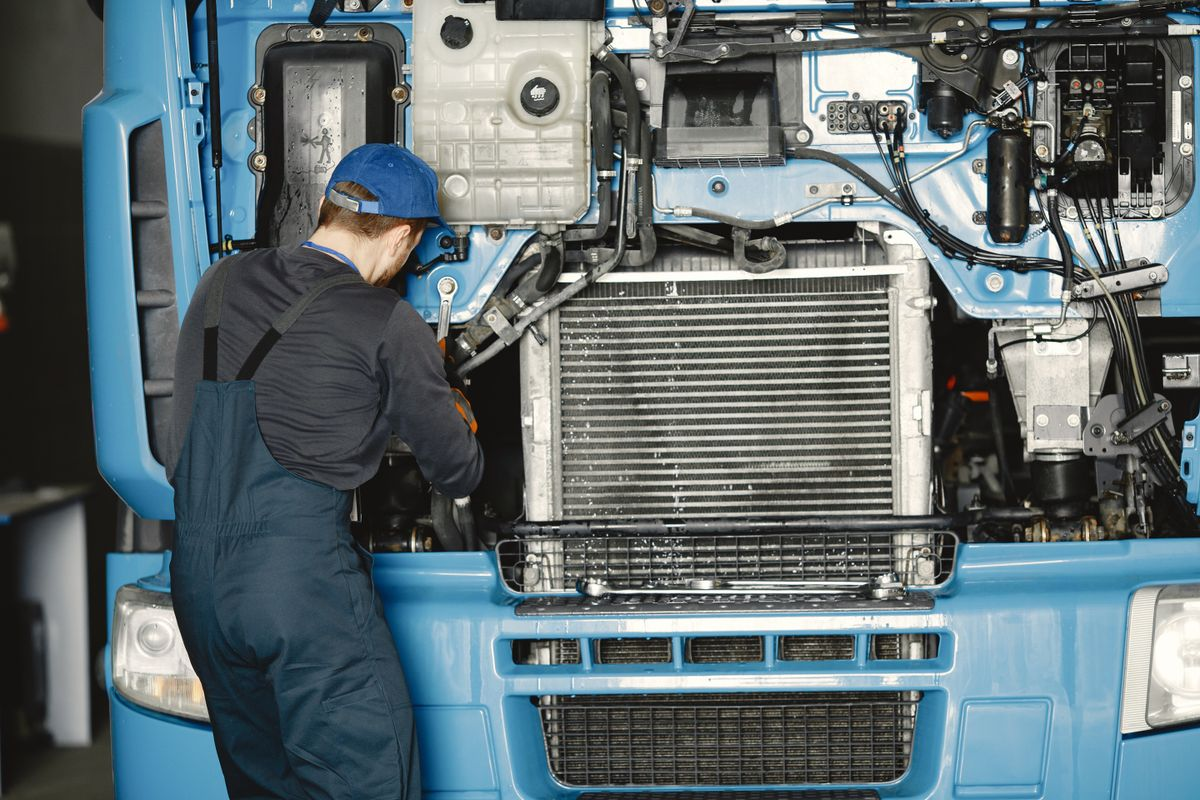
Why Truck Overheating Is Serious for Fleets
For an individual vehicle, overheating can mean an unexpected repair. For a commercial fleet, the impact can be much larger. A single overheating truck can result in:
- Driver downtime
- Missed delivery schedules
- Delayed jobs
- Emergency repair costs
- Towing expenses
- Lost productivity
- Potential engine damage
Cooling-system problems that are not addressed early can develop into more serious engine issues and costly downtime. For fleet operators, preventing overheating isn’t only about protecting the engine — it’s also about protecting uptime and keeping vehicles available for scheduled work.
Truck Overheating Warning Signs
Drivers should pay attention to changes in vehicle performance and temperature. Common warning signs include:
Rising temperature gauge — a temperature gauge that moves higher than normal can indicate a cooling-system problem. Report unusual readings rather than assuming they are normal.
Dashboard warning light — a coolant or temperature warning light should not be ignored.
Steam from the engine area — steam may indicate that coolant or another component has reached an excessive temperature.
Coolant smell — a noticeable sweet smell may indicate a coolant leak.
Visible fluid leaks — fluid underneath the truck or around the radiator, hoses, or engine should be inspected.
Loss of engine performance — an overheating engine may experience reduced performance or other unusual behavior.
Repeated overheating — a truck that repeatedly runs hotter than normal should be inspected even if it eventually returns to a normal temperature.
When Should You Stop Driving an Overheating Truck?
Drivers should take overheating seriously and prioritize safety. Safely stop the truck if:
- The temperature gauge reaches the red zone
- A temperature warning appears
- Steam is coming from the engine area
- Coolant is leaking rapidly
- The engine begins losing significant power
- The truck develops unusual engine noises
- The temperature continues rising despite normal operation
If possible, move the truck to a safe location and shut down the engine. Do not continue driving simply to reach your destination if the engine is overheating — continuing to operate an overheating engine can turn a cooling-system problem into much more serious engine damage.
What Should You Do If Your Truck Overheats?
If a truck starts overheating, taking the right steps can help reduce the risk of additional damage.
1. Pull over safely. Move the truck to a safe location as soon as reasonably possible. Prioritize your safety and the safety of other road users.
2. Stop and avoid further engine stress. If the temperature continues to rise, safely pull over and shut down the engine when appropriate. Avoid unnecessary acceleration or continued operation once you have reached a safe stopping location.
3. Do not immediately open the radiator. A hot cooling system may be pressurized. Never open a hot radiator cap or coolant system. Allow the vehicle to cool before attempting an inspection.
4. Look for visible problems. Once the vehicle has cooled and it is safe to inspect, look for obvious issues such as coolant leaks, damaged hoses, broken belts, steam, or visible component damage. Do not attempt repairs if doing so would put you at risk.
5. Have the truck inspected. If the cause of the overheating is unknown, continuing to drive may increase the risk of additional damage. A qualified commercial truck repair provider can diagnose the underlying issue and determine what repairs are needed.
Fleet maintenance tip: don’t wait for the temperature gauge to reach the red zone before taking action. Drivers should report unusual temperature readings, coolant loss, warning lights, or recurring overheating as soon as possible.
How to Prevent Truck Overheating
Preventive maintenance can help identify cooling-system problems before they result in roadside downtime. Fleet operators should consider the following practices.
Monitor coolant levels. Check coolant levels according to the manufacturer’s recommendations and investigate repeated coolant loss rather than simply topping it off.
Check coolant condition. Follow the manufacturer’s recommendations for coolant type, condition, testing, and service intervals. Coolant also helps protect cooling-system components from corrosion.
Inspect hoses and belts. Look for cracks, leaks, loose connections, soft spots, and visible wear, since certain belt problems can affect cooling-system components.
Keep the radiator and cooling package clean. Dirt, dust, insects, and road debris can restrict airflow. Regular cleaning helps maintain cooling performance, especially in dusty or demanding environments.
Monitor engine temperature. A temperature trend that is consistently higher than expected can be an early indication that the cooling system needs attention.
Address warning lights quickly. Ignoring warning lights can allow a small problem to become a much larger repair.
Follow a preventive maintenance schedule. Regular inspections help identify worn or failing components before they cause unexpected downtime.
Truck Cooling System Maintenance Checklist
Fleet managers can use this simple checklist when reviewing vehicle maintenance:
- Check coolant level
- Check coolant condition according to manufacturer recommendations
- Inspect for coolant leaks
- Inspect radiator and cooling-package condition
- Check hoses and clamps
- Inspect belts
- Check cooling fan and related components
- Monitor engine temperature
- Investigate warning lights
- Address recurring overheating
- Document maintenance and repairs
Keeping accurate maintenance records can also help fleet managers identify recurring problems and plan repairs before they become emergencies.
Truck Repair for Bay Area & Central Valley Fleets
Commercial trucks operating throughout the Bay Area and Central Valley can face demanding conditions, including long routes, heavy loads, extended idling, stop-and-go traffic, and hot weather. For businesses that depend on commercial vehicles every day, an overheating truck can quickly become a fleet-management problem.
ADM Auto Services helps fleet operators address preventive maintenance and commercial truck repair needs across the Bay Area and Central Valley. Regular inspections can help identify cooling-system concerns and other maintenance issues before they contribute to unexpected vehicle downtime.
Need Help With an Overheating Truck?
An overheating truck shouldn’t be ignored. Continuing to operate a vehicle with a cooling-system problem can lead to additional damage, unexpected downtime, and more expensive repairs. ADM Auto Services provides mobile preventive maintenance and commercial truck repair across the Bay Area and Central Valley.
If your truck is overheating, losing coolant, showing temperature warnings, or experiencing other cooling-system problems, don’t wait for a roadside breakdown. Call ADM Auto Services at 510.552.4926.

Jermiah King is the founder of ADM Auto Services. A trained diesel technician, he brings deep hands-on experience from the oil field and advanced manufacturing industries, including robotics and PLC work. After relocating to California in 2017, he founded ADM Auto Services to pursue what he loves most — keeping fleets running with expert, reliable vehicle service across the Bay Area and Central Valley.